
by Noetzie | Aug 6, 2013 | Blog
The old Noetzie castles before demolition and renovation.
I’ve noticed that the words used in the title of this blog post are the most popular search terms bringing traffic to this website. I think people are fascinated by castles because castles take them back to their childhood, fairy tales and stories of pirates and hidden treasures.
I do not want to disappoint you but there are no old buried treasure tales to spice up Noetzie’s history- the more interesting parts of the castles’ history seemed to have happened in the last decade (access battles, protest marches, ancient skeletons and a few other present day issues I don’t want to mention here).
Some of the oldest castles at Noetzie have been demolished and re-built, to bring them into the ‘top dollar’ luxury property market bracket. The last remaining old castle is called Pezula Castle and was built about 75 years ago, and was the inspiration for the name of the neighbouring estate, perhaps? After all, we heard a rumour that the developer arrived at Noetzie by helicopter, landing on the beach in front of the old Pezula Castle. ‘Pezula’ is Zulu word meaning ” up high” or “in the heavens”. This particular castle remains empty and abandoned, not really safe for occupation. I wonder if the castle will eventually be fixed up too, or will it be allowed to slowly go to ruin? As it is over 60 years old it does have heritage status. My husband and a few others who have been there at night, say it is haunted. He used to hang out there with his friends when they were teenagers and the stories about the ghosts pushing them down the stone steps seem to have been exaggerated with each re-telling. So I am not convinced they are true, but nor would I even dream of going there on a stormy, moonless night.
We have watched ordinary people in all shapes and sizes make the trek down the stairs from the car park, wanting to see the castles with their very own eyes. They walk on to the beach in front of the castles, turn around, point and pose for photographs, and immediately leave the beach- back up the 116 steps and a very steep track. That is a real pilgrimage of love for knobbly stone buildings, with not much history to speak of. We never can believe that the castle fans do not walk on the beach, or cool their sweaty toes in the river mouth or just stop to properly enjoy the breathtaking beautiful Nature at Noetzie. The statistics for this website seem to reflect a similar fascination for the Noetzie castles.
Here are some castle photographs for the fans of Noetzie castles. There are more pictures, stories and information about the castles on the History and Gallery pages of this website. Of the six castles at Noetzie, which is your favourite? I think the smaller Perekuil Castle is the nicest one. Tucked around the corner on the far Western end of the beach with it’s own little beach and gulley.
There are plans for another new large castle on the western end of the beach . Maybe that will force the castle fans to explore a bigger area and enjoy the beach more?
by Noetzie | Jul 1, 2013 | Wildlife
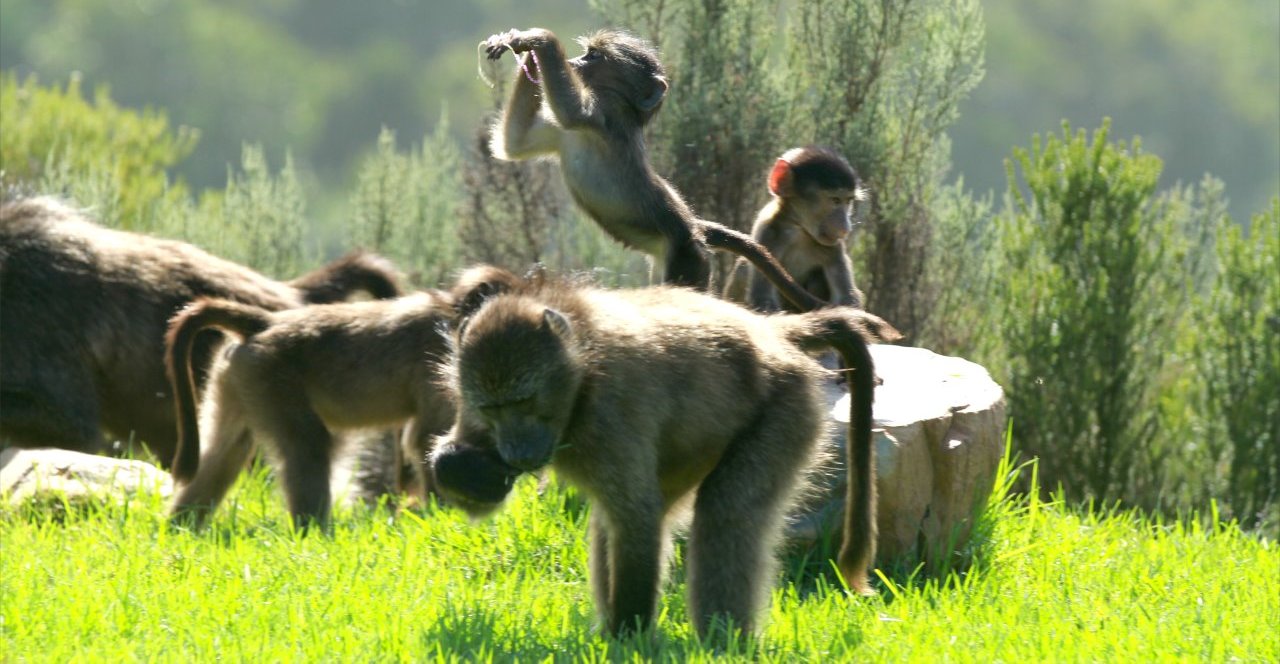
Despite all the negative press around baboons, it is quite easy to live in harmony with baboons and monkeys. People who choose to live in areas where baboons forage for food benefit from acquiring a mind-set that supports peaceful co-existence. People who refuse to follow the few basics will suffer baboon problems. It is as simple as all that.
Food is the single crux of all things baboon.
Here are the basics guidelines for living in harmony with the Noetzie baboons
1. Baboons will climb on your house :
Baboons are foragers and will hunt everywhere for food because their lives depend on that success. If your home is in an area where baboons and monkeys roam for food, they are going to climb on your house. You cannot change that. Even electric fencing will let you down over time. You can, however, change outcomes by making your home benign to damage. Choose flush light fittings and set wires and dishes in ways that are not clambering spots onto your roof. Baboons will play on garden furniture. Whether that is a delight or a nightmare is up to you. We have robust stuff that cannot suffer from being chewed or moved. They love playing with cushions. If you leave soft furnishings outdoors, they will get chewed. We chase baboons off our house but not from our garden. It seems that the older baboons understand as they idly watch naughty juveniles being chased, sometimes screaming, from the roof.
2. Educate your fellows:
One weak link can leave you with endless trouble. If a neighbour or tenant allows a baboon to enter a house and steal food, this is the beginning of high stress for both the baboon and the human. And the neighbours ! Homeowners would find huge benefit in educating their fellow humans before any such wildlife destruction occurs. Feeding “cute” baboons, or using food to lure baboons is, in essence, a murderous gesture. And it is illegal.
3. Lock up :
Keeping your house closed is not an option. Its imperative. People who are not prepared to keep their homes closed are not suited to living in wild areas. If baboons were lions, people would not think twice about keeping things closed. It should be the same for all wild animals. Keep them out. Clearbar on all opening windows affords one the luxury of leaving windows open unattended. Leaving doors open unattended, even for a minute, is not smart. Because baboons have opposable thumbs, we do not just close doors but keep all doors locked all the time.
4. Keep food out of view:
Baboons will not stop trying to get at food they can see. Baboons have been known to take sliding doors off their trolleys to get at fruit bowls on tables. They have sheared opening mechanisms off windows with their strong fingers to get to food they could see. The choice is simple. Keep food out of view or be broken in and be raided.
5. Remove access to food :
Leaving food outdoors under any circumstances is the start to your baboon troubles. Do not leave food anywhere, like left-over plates at parties and luncheons. This includes accessible rubbish bins. Even food off your property at so called “feeding stations” is not a good idea since baboons should forage for wild food. Children should never be left with food unattended.
What to do if confronted by a baboon
- In your garden or house, stand still and remain calm. Sudden movements will make it act defensively.
- Back away slowly and do not block its escape route.
- Be determined, decisive and confident when driving a baboon off.
- Spray the baboon with a strong stream of water as they hate water. Have a water pistol in the house and a hose pipe ready in the garden.
- Keep pets out of the way.
- Do not try to snatch back anything from a baboon – it will fight to hold on to food.
- Do not threaten infants and juveniles as adults, in particularly the alpha male, will protect them with aggression if necessary.
Following these simple basics will help keep baboon troops in the area as they should be – wild. Wild baboons are not pests but delightful animals one is privileged to observe. I love our wild baboons and they provide me with hours of photographic opportunities.
by Noetzie | Feb 20, 2013 | Blog
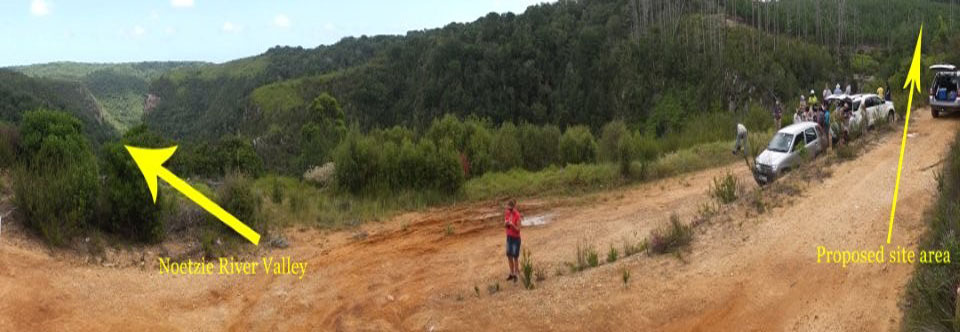
The envisaged Discovery Park on our doorstep will be a first in the world, putting both Knysna and South Africa on the map. Biomimicry attempts to follow the design principles of nature. The emphasis is not “green”, but to find solutions to problems. For example – more streamlining in jets. That it looks to nature, where there is no destruction in construction, and development takes place with a symbiotic relation to the surrounding environment, the solutions would more than likely be environmentally supportive.
This project is the brainchild of SUSAN SWAIN. She was our guest at the NCOA’s 2013 AGM.
Sue Swain has had an interest in Biomimicry since 2004 and attended the Biomimicry in Design Workshop with Janine Benyus in September 2009. Motivated by the belief that biomimicry is something that can be applied in all areas of our lives, Sue has been working on a model for the Garden Route town of Knysna based on the principles, strategies and processes of a natural system.
These principles have been distilled into a model to help Knysna “function like a forest”. The model can be used to guide how we run our businesses, live our lives, plan and run the town, and solve any number of problems from design challenges to tourism-related issues. Sue has also just received funding from the National Lotteries Board, from a funding proposal submitted in 2005, to coordinate the research and design of and fund-raise for the establishment for a Biomimicry Discovery Park. This will essentially be a public education facility and eco-tourism attraction rolled into one very interactive, fun and engaging park designed to immerse people in the fascinating world of nature and reveal how we can draw lessons from all we see around us.
Before we headed out to the site where we spent the afternoon, we were treated to a talk by CLAIRE JANISCH.
Claire, a chemical engineer, is a sustainability & innovation advisor and biomimicry professional. She is a graduate of and a co-trainer for the international 2-year biomimicry Professionals Program. She currently heads up biomimicrySA. Claire works in the areas of strategy, technology & education and is the leading presenter, trainer and consultant for biomimicry in South Africa. She is also a co-creator of the Genius Lab, an experiential learning organisation inspiring innovation and future thinking for organisations and individuals (children and adults). She finds inspiration and innovative solutions to human challenges by emulating organisms and ecosystems that fit in on this beautiful planet in well-adapted life-enhancing ways. As a biomimicry professional she spends her time exploring nature’s technological miracles in diverse ecosystems and shares this new way of viewing and valuing nature through expeditions and workshops – teaching & training professionals, students and scholars. She also dives deeper into research for companies and organisations- translating nature’s innovation and sustainability principles for the design of new products, processes & systems. Claire has a MSc in the field of Environmental Process Engineering and has worked across Africa as a consultant in: Environmental Technology, Sustainable Energy & Climate Change, Cleaner Production, Sustainable Urban Design, Integrated Waste Management, Sustainable Agricultural Practices, Eco-labelling, Environmental Management & Environmental Education. Claire was selected in the Mail & Guardian’s 200 young South Africans in 2010 and 2011. She was a finalist in the Most Influential Women in Business & Government awards in 2012.
On site we were given a field talk by local Field Guide expert Mark Dixon who gave us some background to the site in terms of geology, weather patterns, flora and micro organisms and did you know that only 30 percent of the organisms we call our body is made up of us ..? The rest is made up of microbes, bacteria and other parasites we host. A glass or two of wine a day, I say ! And that the ratio of human to insects is 1: hundreds of millions ?
The architect who is very keen on this project and as far as I can make out, will be the architect, is Mick Pearce. He is a designer of living buildings, the Eastgate Centre in Harare being the most famous. What a lovely man and being with him was awesome.
John Todd who wrote a book called LIVING MACHINES will be the next guest to the project in October. He is a world expert on water.
The other outstanding giant mentioned is Wes Jackson, a Texan who wrote about farming the Prairies using bio biomimetic principles. His book is considered a bible of green agricultural practice CONSULTING THE GENIUS OF THE PLACE.
Here is some dinner table info to keep your guests in gusts of interest :
A Tardigrade is a microscopic organism which can be boiled, frozen or dehydrated for 120 years. Undo it and it gets up and walks away. They have used that concept of myothelial sugar coating to successively transport vaccines, thereby reducing fridge costs and accidental loss of stock through breaks in the cold chain
They have made a polymer called SHRILK, which is a fabric with silk properties – stronger than anything man has made in the past.
Biomimicry is an attempt to solve problems by asking different questions. Look to the problem..ask the question..locate the verb and ask what nature does with that verb. We workshopped that in groups with Claire it was very interesting.
 We usually think of recycling as “cradle to grave” or down-cycling , and yet nature recycles in the “cradle to cradle” or re cycling style.
Mick Pearce explains Architecture as the “third skin”. Our skin is first, our clothes are second and our shelters are the third.
Early architecture was based on fire…and now our “fire” comes from a plug in the wall. The invisible nature of our fire from the principle of energy is seen to be problematic in the way that much modernity is… we are removed from the essence. For example, the humble plastic water bottle has nearly as much equity value, in terms of mined carbon,…as…you can hardly believe it…DIAMONDS !!!
The idea for developers is to use the tree as the example. The tree is a complete living organism which re cycles. Further, it is decentralised – each leaf is self sufficient. The idea would be to have buildings which are modular and each mode being self sufficient in terms of energy, water and waste. This would take away the clumsiness of centralised processing.

